

Many believe AI fashion tools simply churn out generic outfit suggestions, but the reality is far more sophisticated. Modern AI analyzes your body measurements, personal preferences, and real-time fashion trends to deliver truly personalized styling recommendations. For busy professionals and fashion novices alike, AI-powered platforms now offer virtual try-ons, dynamic outfit generation from a single wardrobe item, and coordinated looks tailored to specific occasions. This guide explores how AI overcomes traditional fashion recommendation limitations, evaluates virtual try-on technology, and empowers you to transform your wardrobe with confidence and ease.
Table of Contents
- The Challenges Of Traditional Fashion Recommendations
- How AI Generates Personalized Fashion Choices
- Evaluating AI Virtual Try-On Technology In Practice
- Applying AI-Driven Fashion Styling For Busy Women
- Discover Your Personalized AI Fashion Stylist Today
- Frequently Asked Questions About AI In Fashion
Key takeaways
| Point | Details |
|---|---|
| AI personalizes fashion | Advanced algorithms analyze body data, preferences, and trends to create tailored outfit recommendations in real time. |
| Virtual try-on reduces returns | Interactive fitting experiences boost confidence and cut return rates by up to 40% through realistic fit simulation. |
| Outfit generation from one item | AI models like OutfitGAN synthesize complete coordinated looks from a single uploaded garment. |
| Scalable architecture ensures reliability | Decoupled AI systems deliver consistent, dynamic styling recommendations that adapt to your evolving preferences. |
The challenges of traditional fashion recommendations
Conventional fashion recommendation systems struggle to keep pace with the industry's rapid evolution. Fashion is visually and emotionally driven with rapidly changing trends, making it nearly impossible for static algorithms to capture the nuanced preferences that define personal style. Unlike other retail categories, fashion demands constant adaptation to seasonal shifts, influencer dynamics, and the complex interplay between brands and consumers.
Traditional recommendation approaches struggle to capture dynamic fashion elements leading to lower satisfaction and higher returns. These systems often rely on basic filters like color, size, or past purchase history, missing critical factors such as garment compatibility, occasion appropriateness, and individual body types. The result? Frustrated shoppers receiving irrelevant suggestions and retailers facing costly product returns.
Fashion recommender systems (FaRS) face unique challenges that set them apart from standard e-commerce tools:
- Trend volatility: What's stylish today may be outdated next month, requiring constant algorithm updates.
- Emotional complexity: Fashion choices reflect identity, mood, and social context, not just functional needs.
- Item compatibility: Pairing garments requires understanding fabric, cut, color theory, and styling conventions.
- Multi-stakeholder dynamics: Influencers, brands, and peer preferences all shape individual fashion decisions.
These limitations create a gap between what shoppers want and what traditional systems deliver. High return rates and abandoned carts signal the urgent need for smarter, more adaptive solutions. AI transforming fashion recommendations addresses these pain points by learning from vast datasets and adjusting recommendations dynamically. The shift from rule-based filtering to intelligent, context-aware styling marks a turning point for personalized fashion.
Traditional systems treat fashion like any other product category, ignoring the emotional and visual complexity that makes style deeply personal.
For busy women juggling careers and limited fashion expertise, these shortcomings mean wasted time scrolling through irrelevant options or settling for safe, uninspired choices. The next generation of AI-driven tools eliminates this friction by understanding not just what you've bought before, but who you are and how you want to present yourself.
How AI generates personalized fashion choices
AI-powered outfit generation goes far beyond simple product matching. OutfitGAN synthesizes complementary fashion items to create coordinated outfits with superior authenticity and compatibility, analyzing a single uploaded garment to generate complete looks for different occasions. This technology considers fabric texture, color harmony, silhouette balance, and styling conventions to ensure every suggested piece works together seamlessly.
The process begins with deep learning models trained on millions of fashion images and outfit combinations. When you upload a blouse or pair of jeans, the AI identifies key attributes like color palette, formality level, and seasonal appropriateness. It then searches its knowledge base for complementary items that match your body measurements, personal preferences, and the intended occasion, whether that's a business meeting, casual brunch, or evening event.
AI algorithms analyze body data and garment characteristics to provide personalized fit assessments. By incorporating your height, weight, body shape, and proportions, the system predicts how garments will drape and fit, eliminating guesswork. This level of personalization ensures recommendations aren't just stylish but also flattering and comfortable for your unique physique.
Virtual try-on technology enhances this experience by letting you visualize outfits on realistic models or your own uploaded photo. Interactive interfaces allow you to swap items, adjust colors, and experiment with accessories in real time. This hands-on approach builds confidence and reduces the anxiety many feel when trying new styles.
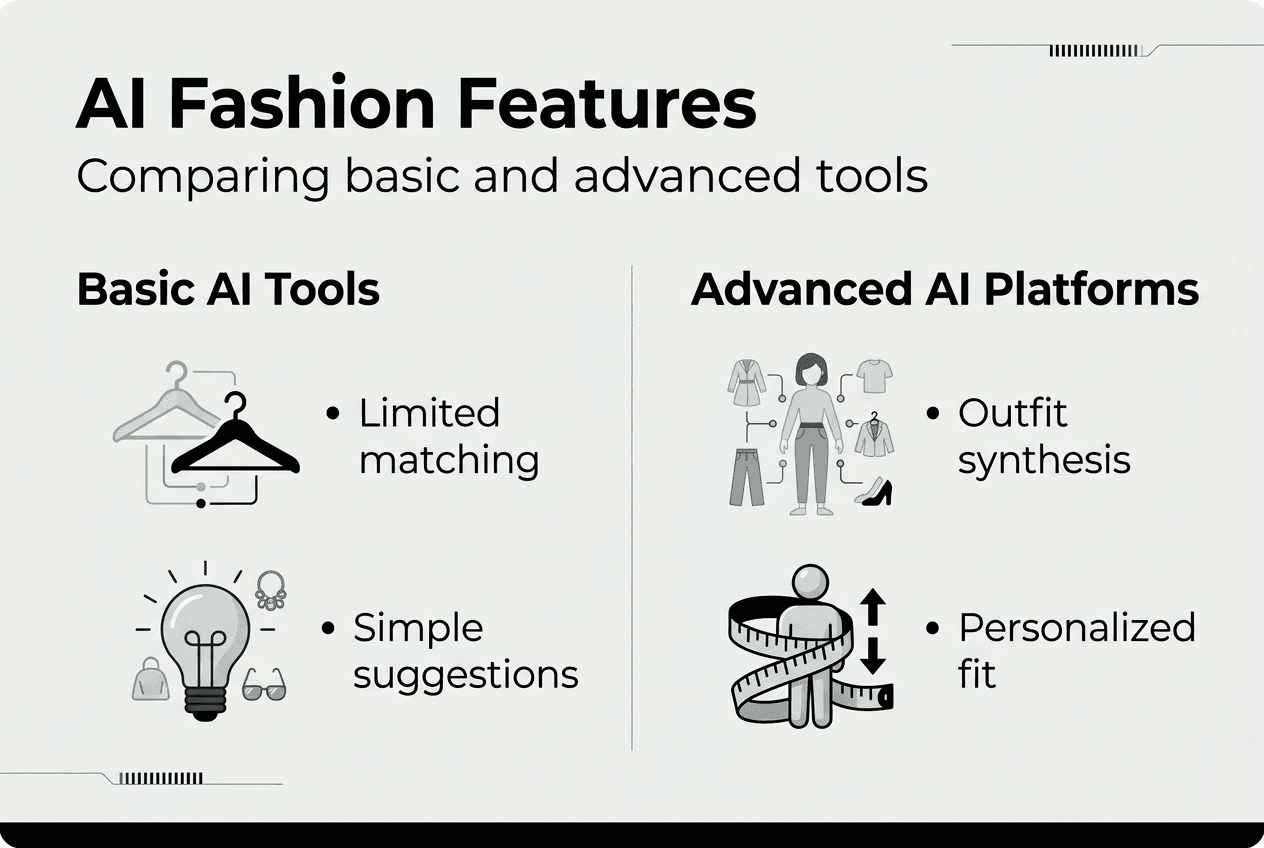
AI outfit generation features comparison
| Feature | Basic AI Tools | Advanced AI Platforms |
|---|---|---|
| Item compatibility | Limited color matching | Full outfit coordination with fabric and silhouette analysis |
| Personalization | Generic size filters | Body measurements, preferences, and occasion-specific styling |
| Authenticity | Stock photo references | Realistic model visualizations with accurate fit simulation |
| Dynamic updates | Static recommendations | Real-time trend adaptation and preference learning |
Pro Tip: Choose AI styling tools that integrate body data and dynamic outfit synthesis. Platforms like OutfitGAN and outfit generation deliver the most accurate, personalized recommendations by combining multiple data sources rather than relying on basic filters alone.
For women with limited fashion knowledge, these tools act as a personal stylist available 24/7. You no longer need to understand color theory or know which accessories complement a particular neckline. The AI handles the complexity, presenting you with polished, cohesive looks that reflect current trends and your individual aesthetic. This democratization of fashion expertise empowers everyone to dress with confidence, regardless of their starting point.
Evaluating AI virtual try-on technology in practice
Virtual try-on systems represent a major leap forward in online shopping, but not all solutions deliver equal results. VTBench benchmark assesses virtual try-on models on quality, texture, background consistency, size adaptability, and hand occlusion. These five dimensions ensure that AI-generated images look realistic, maintain garment details accurately, and adapt to different body types without distortion.
Quality evaluation examines whether the virtual try-on preserves the original garment's appearance, including intricate patterns, logos, and embellishments. Texture consistency checks if fabrics like silk, denim, or knitwear render convincingly across different poses and lighting conditions. Background consistency ensures the AI doesn't introduce artifacts or awkward edges around the model. Size adaptability tests whether the system handles petite, plus-size, and tall body types equally well. Hand occlusion assessment verifies that the AI correctly renders hands and arms interacting with clothing, avoiding unnatural overlaps or disappearing limbs.
Human preference annotations play a crucial role in refining these systems. By collecting feedback from real users on which virtual try-on images look most natural and appealing, developers train AI models to align with genuine human expectations rather than purely technical metrics. This feedback loop continuously improves the technology, making virtual try-ons more trustworthy and useful.

AI-powered virtual try-on reduces return rates by up to 40% in case studies. When shoppers can visualize how garments fit and look before purchasing, they make more informed decisions. This confidence translates directly into fewer returns, lower costs for retailers, and less frustration for customers who receive items that don't meet expectations.
Traditional photos vs. AI virtual try-on
| Aspect | Traditional Product Photos | AI 3D/AR Virtual Try-On |
|---|---|---|
| Personalization | Generic model, one body type | Customized to your measurements and proportions |
| Interactivity | Static images, limited angles | 360-degree views, pose adjustments, real-time changes |
| Fit accuracy | Guesswork based on size charts | Precise simulation of drape and fit on your body |
| Confidence level | Uncertainty about appearance | High confidence from realistic visualization |
What to look for in virtual try-on systems:
- Body measurement integration: The best platforms ask for your height, weight, and key measurements to generate accurate fit predictions.
- Multiple angle views: Look for 360-degree rotation or pose options to see how garments move and drape from all sides.
- Lighting and texture realism: High-quality systems render fabrics convincingly under different lighting conditions.
- Accessory compatibility: Advanced tools let you add shoes, bags, and jewelry to complete the look and assess overall harmony.
- Mobile optimization: Since many shoppers browse on phones, ensure the virtual try-on works smoothly on smaller screens.
Pro Tip: Busy professionals should prioritize virtual try-on solutions offering precise fit simulation. Spending five minutes visualizing an outfit on your body saves hours of returns, exchanges, and wardrobe frustration later.
Virtual try-on technology bridges the gap between online convenience and in-store confidence, letting you shop from anywhere without sacrificing fit assurance.
For women new to online fashion shopping, virtual try-ons remove the intimidation factor. You can experiment with bold colors, unfamiliar silhouettes, and trendy pieces without commitment. This low-risk exploration encourages style growth and helps you discover what truly works for your body and lifestyle. Virtual try-on technology insights provide deeper dives into specific platforms and their unique features.
Applying AI-driven fashion styling for busy women
Integrating AI styling tools into your daily routine doesn't require technical expertise or hours of setup. Start by choosing platforms that prioritize personalization and real-time trend updates. Upload a few wardrobe staples and let the AI generate coordinated outfits for different occasions. This instant styling guidance saves precious time on busy mornings when you need to look polished but can't afford decision fatigue.
Virtual try-on apps bring the fitting room to your home, eliminating the need for fashion knowledge. Simply upload your measurements and photo, then browse garments to see how they look on your body. This hands-off approach empowers you to explore new styles confidently, knowing the AI has already filtered for fit and compatibility. You can experiment with trends without the risk of purchasing items that don't suit your proportions or aesthetic.
The decoupled architecture of AI fashion systems promotes scalability and reliability. This technical foundation ensures consistent performance even as your wardrobe grows and your preferences evolve. Scalable systems handle increased data without slowing down, delivering recommendations quickly whether you're styling one outfit or planning an entire week's worth of looks.
Tips for selecting AI fashion apps:
- Personalization level: Choose platforms that ask detailed questions about your style preferences, lifestyle needs, and body measurements rather than relying on generic filters.
- Real-time trend updates: Ensure the AI incorporates current fashion trends so recommendations stay fresh and relevant.
- Body data usage: Prioritize tools that analyze your proportions and suggest garments tailored to your unique shape.
- Interactive try-ons: Look for apps offering virtual try-on features with realistic rendering and multiple angle views.
- User reviews and case studies: Check testimonials from women with similar body types and fashion goals to gauge effectiveness.
Pro Tip: Regularly update your AI profile with new preferences, measurements, and feedback on past recommendations. The more data you provide, the more accurate and personalized your styling suggestions become over time.
For women juggling careers, families, and social commitments, AI styling tools act as a reliable fashion partner. Instead of spending weekends shopping or scrolling through endless product pages, you receive curated outfit options that match your schedule and aesthetic. This efficiency frees up mental energy for more important priorities while ensuring you always look put together and confident.
AI fashion styling examples showcase the diversity of looks possible with intelligent outfit generation. From casual weekend wear to professional business attire, AI adapts to your needs without requiring you to become a fashion expert. The technology handles the complexity, so you can focus on living your life.
Adopting AI-driven styling also reduces impulse purchases and wardrobe clutter. By visualizing how new items work with your existing clothes, you make smarter buying decisions and build a cohesive wardrobe. This intentional approach saves money, minimizes waste, and ensures every piece earns its place in your closet.
Discover your personalized AI fashion stylist today
Style-Solver brings cutting-edge AI technology directly to your wardrobe, transforming how you approach daily styling. Upload a single clothing item and receive three complete outfit ideas tailored for everyday wear, evening events, business meetings, or sports activities. Our platform analyzes your garment and generates professionally styled images featuring models dressed in coordinated looks, helping you visualize versatile ways to wear what you already own.
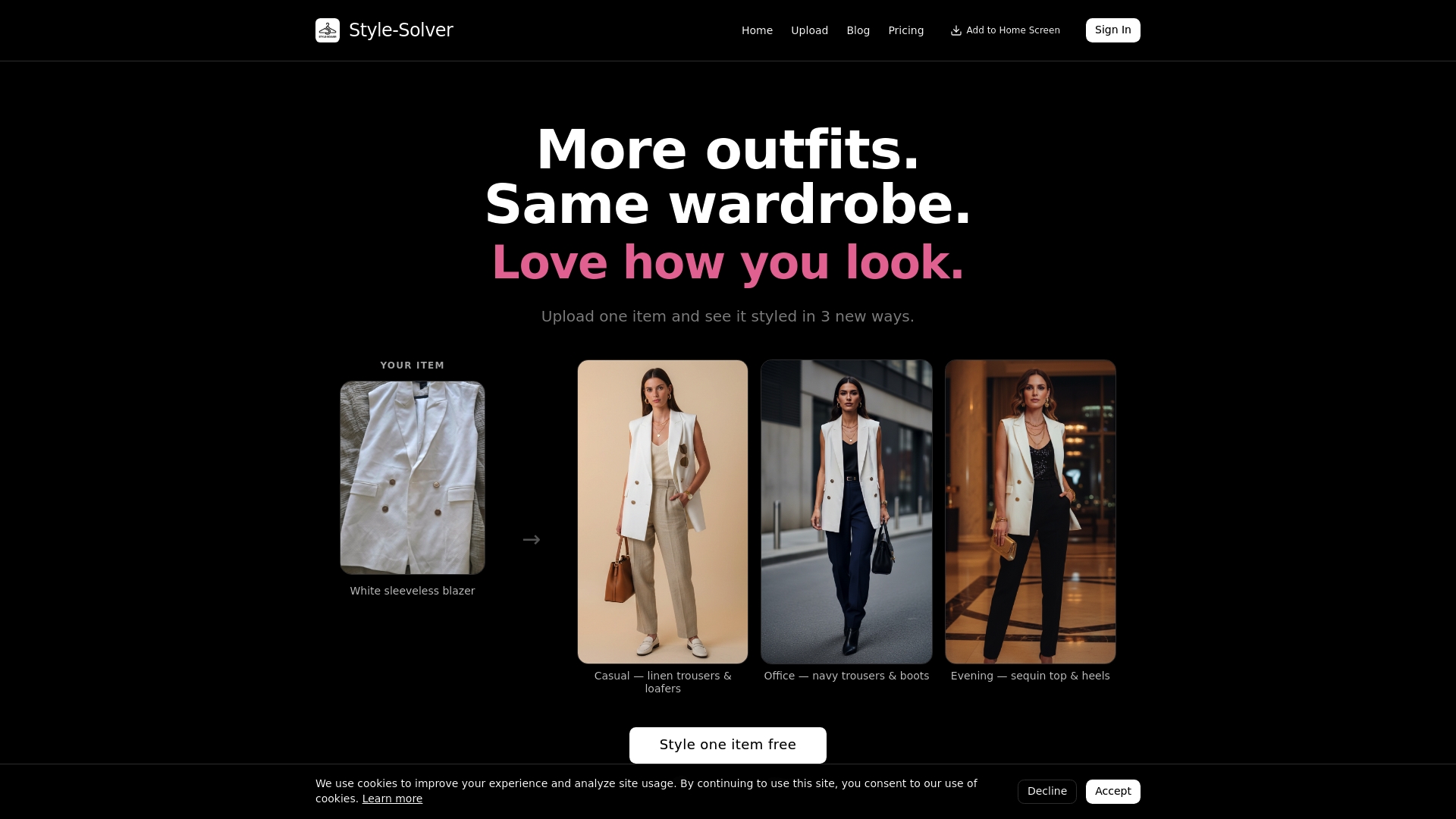
Experience the benefits of AI-powered fashion styling:
- Save time with instant outfit generation that eliminates morning wardrobe stress.
- Boost confidence through virtual try-ons and personalized fit recommendations.
- Reduce returns by visualizing complete looks before making purchases.
- Stay current with real-time trend adaptation and dynamic styling suggestions.
Pro Tip: Explore the AI fashion styling examples gallery to preview AI-curated looks and discover your personal style direction before committing to new pieces.
Whether you're a busy professional seeking quick styling solutions or someone building fashion confidence from scratch, Style-Solver simplifies wardrobe management through innovative AI technology. Create a free account, upload your favorite items, and let our AI fashion stylist and outfit generator handle the creative work. Manage your purchase history and track your evolving style preferences as the AI learns what works best for you.
Frequently asked questions about AI in fashion
What is AI fashion styling and how does it work?
AI fashion styling uses machine learning algorithms to analyze clothing items, body measurements, and personal preferences, then generates coordinated outfit recommendations. The system learns from millions of fashion images and real user feedback to suggest looks that match your unique style, body type, and occasion needs.
How accurate are virtual try-on technologies for fit?
Virtual try-on accuracy depends on the quality of body measurements provided and the AI model's sophistication. Advanced systems that incorporate detailed body data and garment characteristics achieve fit predictions comparable to in-store experiences, reducing return rates by up to 40% in documented case studies.
Can AI keep up with rapidly changing fashion trends?
Yes, modern AI fashion platforms continuously update their recommendation engines by analyzing current runway shows, influencer content, and social media trends. This real-time learning ensures styling suggestions reflect the latest fashion movements rather than outdated preferences.
Is AI fashion styling suitable for beginners?
Absolutely. AI styling tools are designed to democratize fashion expertise, making professional-level outfit coordination accessible to everyone regardless of fashion knowledge. The technology handles complex styling decisions like color matching and garment compatibility, presenting you with polished, ready-to-wear looks.
How does AI reduce product return rates in fashion retail?
AI reduces returns by providing accurate fit predictions, realistic virtual try-ons, and personalized recommendations that match individual preferences. When shoppers visualize how garments look and fit before purchasing, they make more informed decisions, resulting in fewer disappointments and returns.
Do I need special equipment to use AI fashion styling?
No special equipment is required. Most AI fashion platforms work through standard web browsers or mobile apps. For virtual try-ons, you simply upload a photo and measurements. The AI handles all processing on the backend, delivering results within seconds.